

Why Does My Sump Pump Keep Running? What’s Normal—and What’s Not?
Learn why your sump pump may be running constantly, when it’s normal, and when it’s a sign of a bigger issue.
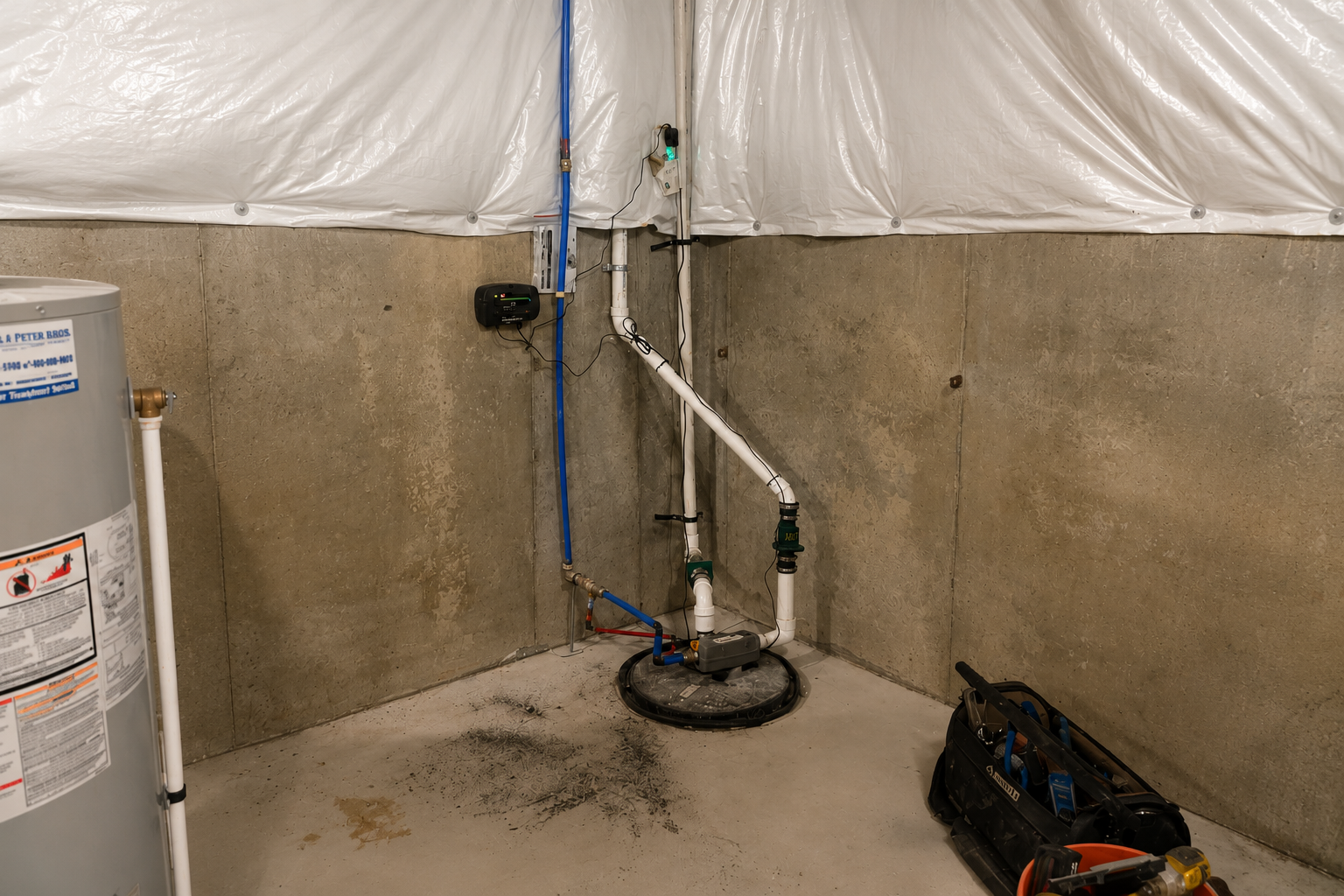
If you keep hearing your sump pump turn on, you might start wondering if something is wrong. The good news is that a sump pump running frequently doesn’t always mean there’s a problem.
Your sump pump’s job is to remove water as it enters the sump pit. So if water keeps coming in, your pump is going to keep working. The important thing is figuring out why the water is coming in and whether your pump is actually working the way it should.
When is it normal for a sump pump to run frequently?
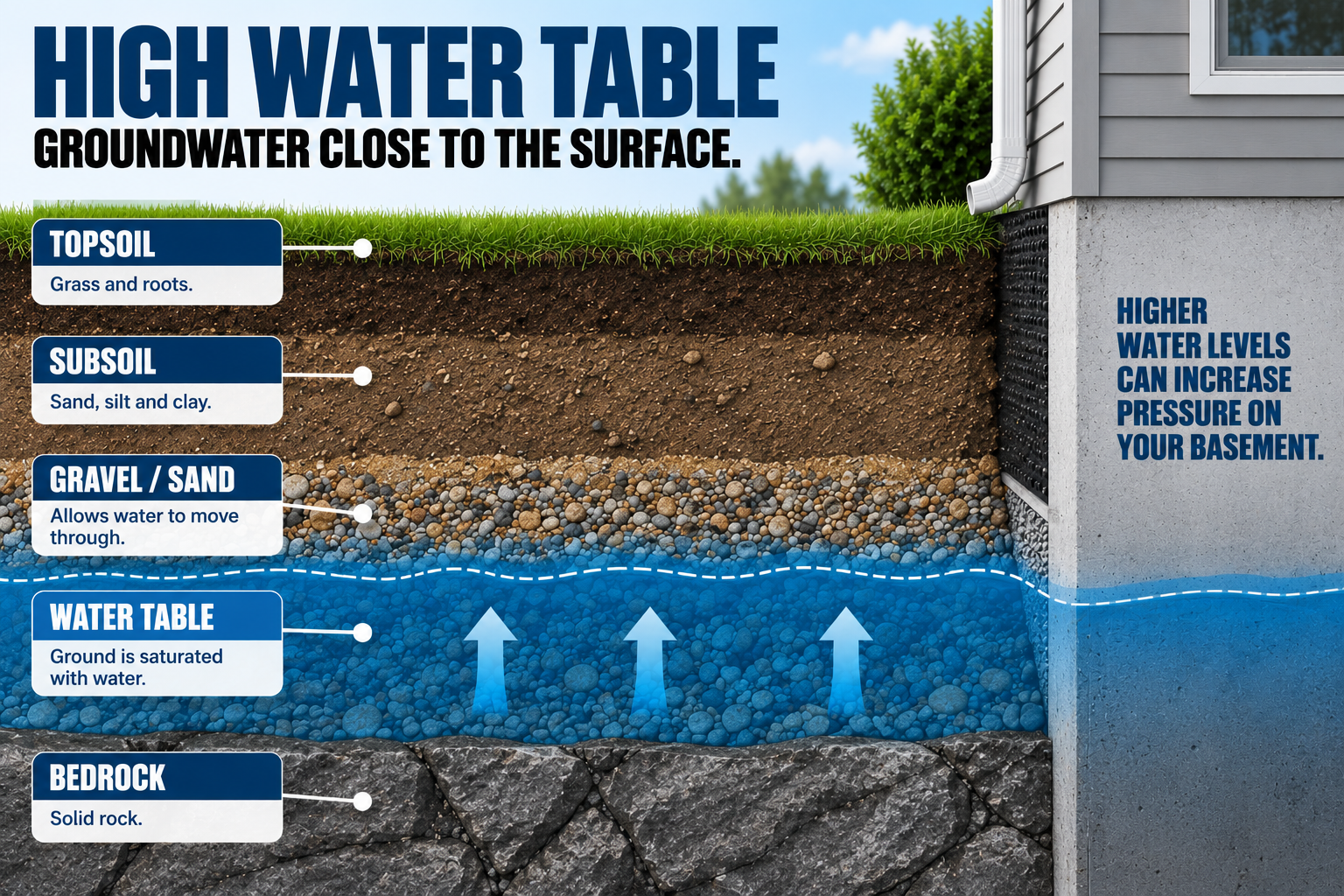
High Water Table Near A Home’s Foundation.
After a good, heavy rain, it can be completely normal to hear your sump pump running more often.
Where your home is located can make a difference too. Homes built in areas with a high water table or naturally wet ground may have more groundwater moving toward the foundation. Homes near lakes or other bodies of water may experience this as well.
The way the land around your home is graded can also affect how much water reaches your foundation. If the ground slopes towards your house rather than away from it, you may notice more water entering the sump system.
So, is there such a thing as your sump pump running “too much”? Not necessarily. If water is continuing to enter the pit, the pump needs to keep removing it. The bigger concern is when the pump seems to be running when there isn’t an obvious reason for it.
Why is my sump pump running when it hasn’t raineD?
If your sump pump is running when it hasn’t rained, first pay attention to whether water is actually entering the sump pit. If water is still coming in, the pump may simply be doing its job. Groundwater around your home can continue moving into the sump system even during dry weather.
Sometimes, though, the pump may be stuck in the on position. Something inside the sump pit could be interfering with the pump, or the float that tells the pump when to turn on and off may be stuck.
If there’s little or no water in the pit and your sump pump continues running or won’t shut off, that’s a good indication that something should be checked.
What are signs that a sump pump has failed?
Unfortunately, a sump pump doesn’t always give you much warning before it stops working. For many homeowners, the first noticeable sign is water where it shouldn’t be.
You may notice water:
Around the perimeter of the basement
Coming through the cracks in the basement floor
Appearing around a floor drain
If you see water starting to enter the basement, your sump pump should be one of the first things you check.
What can you check yourself?
Start by looking inside the sump pit. Is it full of water?
If the water level is high and the pump isn’t removing it, check whether the electrical outlet powering the sump pump is working.
If the outlet doesn’t have power, check the breaker. If the outlet has power, but the sump pump still isn’t working properly, the pump itself may have failed.
Once you’ve check those basics and the pump still isn’t operating correctly, it’s time to call a plumber.
STILL NOT WORKING?
LET’S TAKE A LOOK.
If your sump pump has power but still isn’t working properly, DC Dedicated Plumbing can help with sump pump repair and replacement throughout Macomb and Oakland Counties, MI.
What happens if you ignore a failed sump pump?
The biggest risk is simple: your basement can flood.
And the longer water is allowed to enter the basement, the more damage it can cause. Catching a failed sump pump early can make a major difference in how much water makes it into your home.
That’s also why having a backup plan is worth considering before the main pump fails.
What if your sump pump goes out while you’re not watching?
We’ve been to homes where the sump pump failed and a fair amount of water has already entered the basement by the time the problem was discovered.
After replacing the failed pump, one of the things we recommend homeowners consider is backup protection.
At minimum, a water alarm placed in or near the sump pit can alert you when the water rises higher than it should.
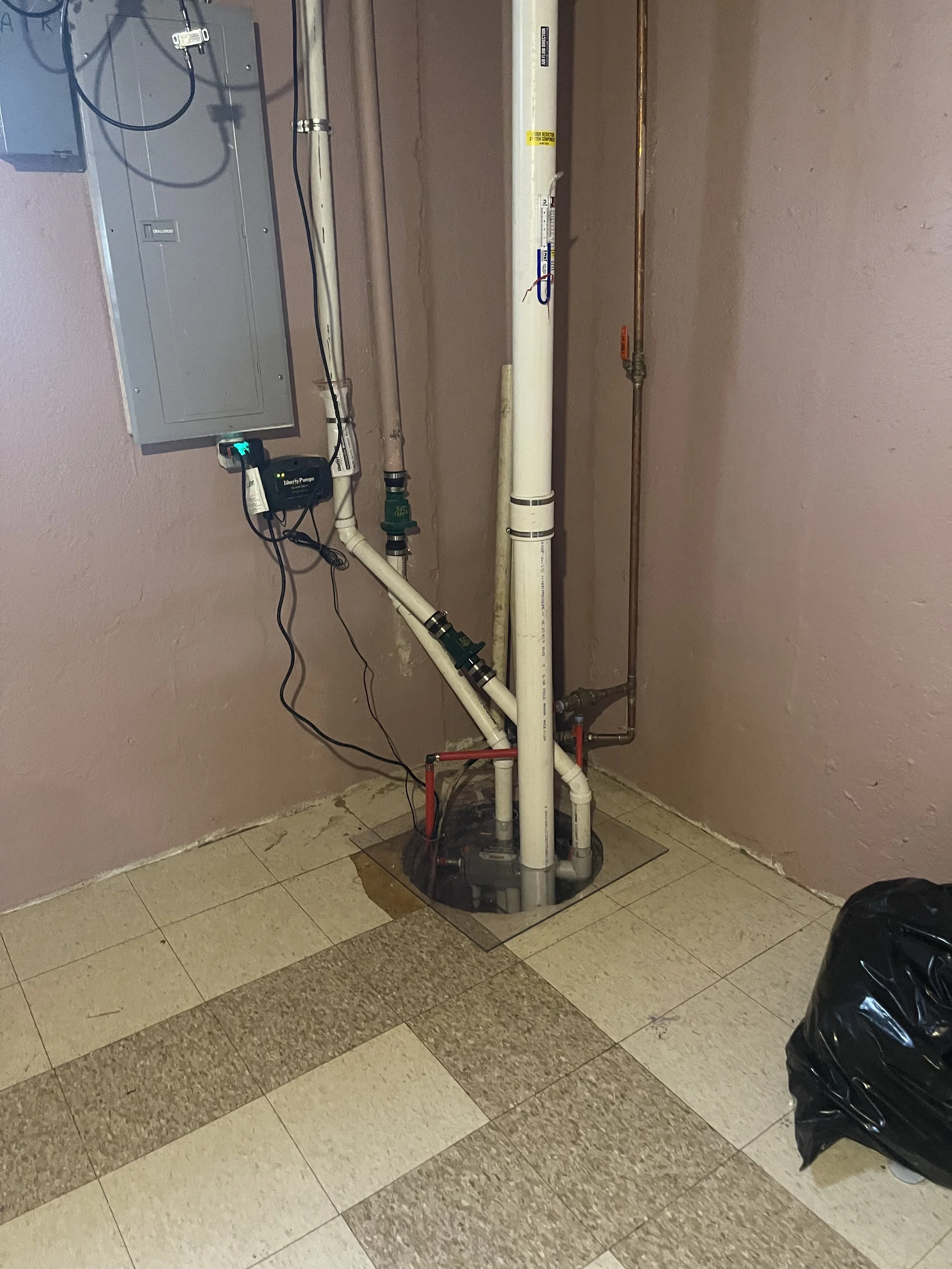
Water-Powered Backup Sump Pump With Alarm
There are also backup sump pump systems. Depending on the home’s water setup, that may include water-powered backup system or a battery-powered backup pump.
A backup system with an alarm offer another advantage: if your primary sump pump fails, the backup can begin handling the water while the alarm lets you know something is wrong.
That’s important because a backup pump isn’t meant to become the new primary pump without you realizing it. For example, a water-powered backup uses your home’s municipal water supply while it operates. If the main pump fails and the backup runs unnoticed for an extended period, you could end up with an unexpectedly high water bill.
That alarm lets you know: the backup is doing its job, but it’s time to get the main sump pump checked.
Not sure if your sump pump is working correctly?
Hearing your sump pump run frequently isn’t automatically a bad thing. During heavy rain, snowmelt, or periods of high groundwater, it may simply be doing exactly what it’s supposed to do.
But if your pump won’t shut off, isn’t removing water, or you’ve started noticing water in your basement, don’t wait until you’re dealing with a flooded floor.
DC Dedicated Plumbing can inspect your sump pump, identify the problem, and help you determine whether repair, replacement, or backup protection makes sense for your home.
Dedicated to your plumbing needs.
SUMP PUMP REPAIR & REPLACEMENT
Need help with your sump pump?
If your sump pump isn't working properly, tell us what's going on and we'll help you figure out the next step.